Personal Development and Wellbeing is a key area of Ofsted’s 2025 Education Inspection Framework. Inspectors are clear that this goes beyond programmes or events — it’s about how effectively schools help pupils develop confidence, resilience, aspiration, and a sense of responsibility for their own learning and future.
When completing the SEF, leaders are expected to show how they evaluate this impact — and pupil voice is an important part of that understanding.
What Ofsted is looking for
Inspectors consider whether schools:
- Support pupils’ wider development, including character and independence
- Help pupils develop aspirations and understand future pathways
- Provide a broad range of extra-curricular and enrichment opportunities
- Promote wellbeing, mental health, and positive relationships
- Enable pupils to take responsibility for their learning and behaviour
Ofsted wants to see that these experiences are consistent across the school, not just described in policy documents.
Core evidence leaders will draw upon
Survey data is certainly not going to provide all the evidence here. Judgements are typically based on triangulating many areas of evidence, likely including:
- Pastoral, safeguarding, and wellbeing logs
- Behaviour and attendance data
- Curriculum and PSHE provision
- Participation in extra-curricular activities and enrichment
- Careers education records and destination data
These sources show what the school offers and how it is organised, but they don’t always capture how pupils experience these opportunities day to day.
Pupil survey data: understanding lived experience
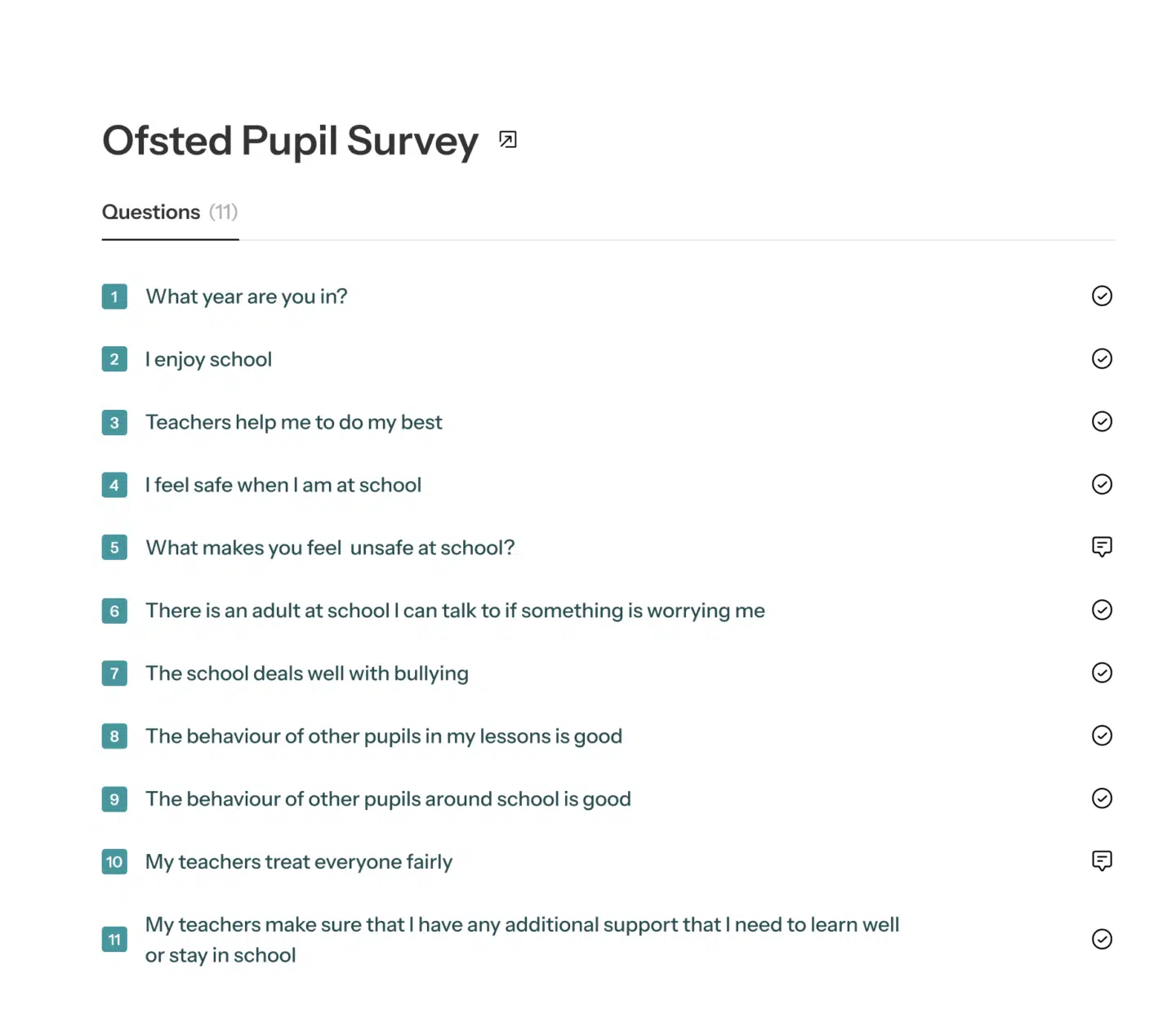
Pupil surveys provide a window into how personal development and wellbeing are actually experienced. They can show whether pupils:
- Are encouraged to aim high and plan for their future
- Feel included in wider school life
- Feel supported emotionally and pastorally
- Value the opportunities available to them
Headline indicators — such as the percentage of pupils enjoying learning, feeling supported, or benefiting from enrichment — can be referenced in the SEF to support leaders’ evaluations. In line with our principles of good surveying, we recommend including specific questions where possible – what happened in your last lunchtime, what you thought of your last trip, how you felt this week etc.
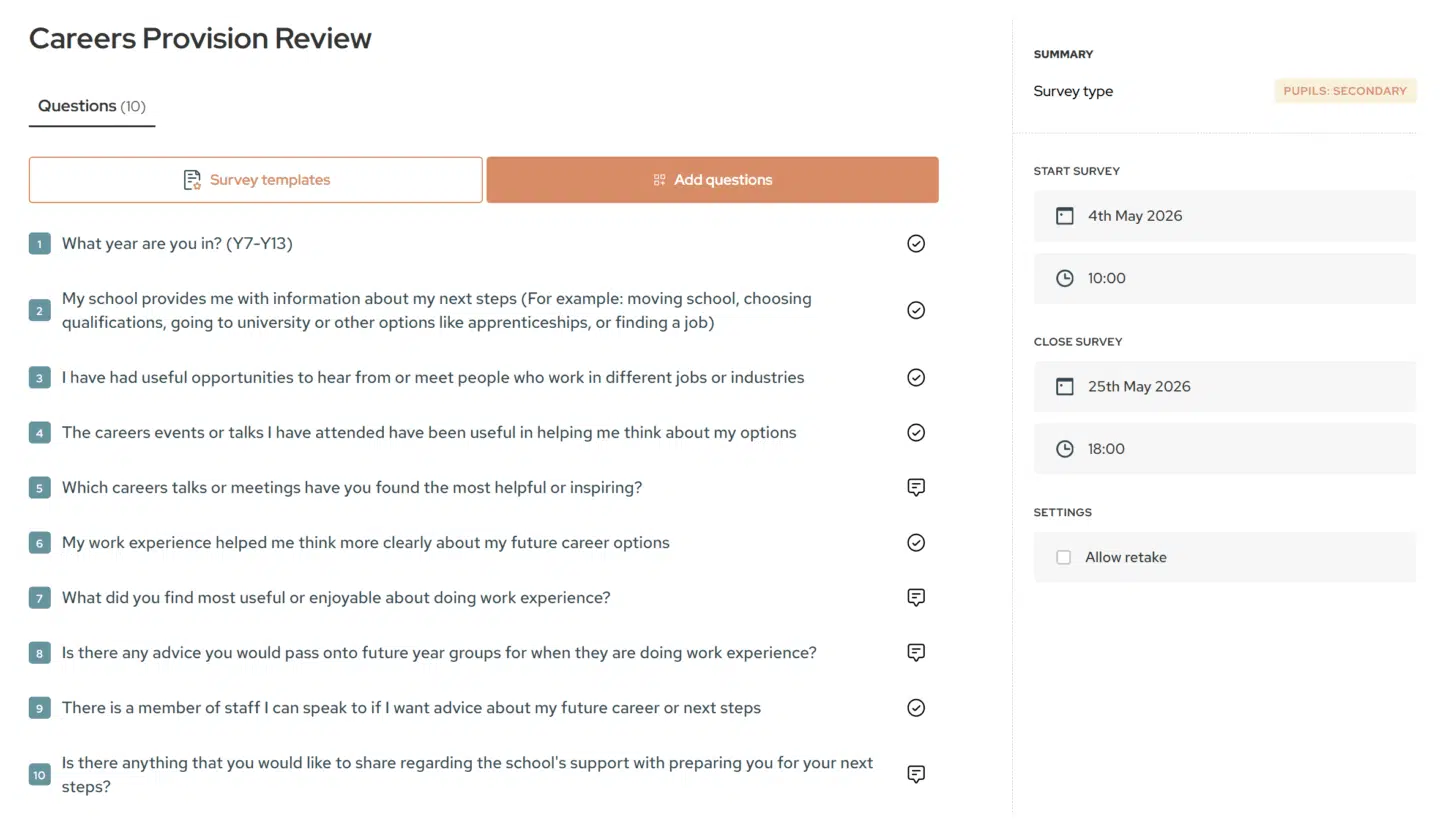
Here’s an example of a survey that focuses on asking pupils for views about the school’s careers education and work experience opportunities:
Using survey evidence proportionately
Leaders do not need to include extensive survey data in their SEF. Referencing a small number of clear pupil survey headlines is usually enough to:
- Support judgements about wellbeing and personal development
- Demonstrate leaders’ understanding of pupils’ lived experience
- Show how evidence informs improvement priorities
Targeted pupil surveys and wellbeing-focused templates allow schools to gather rich insight while keeping SEF references concise and inspection-ready.
Used well, pupil survey data strengthens the SEF by showing personal development and wellbeing through the eyes of pupils themselves — exactly what Ofsted expects to see.
Further ideas and support
There are lots of other posts that you may find useful here in the School Surveys blog, including boosting parent responses, support with survey planning and our summary of surveying and the new Ofsted framework.
There’s also plenty of debate and discussion about what constitutes ‘belonging’ for pupils, and how this can be measured; you can read more about this in our sister post on Pupil Belonging: Measuring What Matters.
If you are an existing member of School Surveys, remember that you can always email or phone us or book a call if you’d like any help.
If you aren’t yet a member and are interested to find out more, please book a demo here, or get in touch via hello@schoolsurveys.com.