Curriculum and Teaching sit at the core of Ofsted’s 2025 Education Inspection Framework. Inspectors are clear that strong outcomes are rooted in a well-designed curriculum and consistently effective teaching. When evaluating this area, Ofsted is interested not only in what is planned, but in how well the curriculum is implemented and experienced by pupils across the school.
For school leaders completing the SEF, this means drawing together multiple sources of evidence to build an accurate picture — with survey data able to play a valuable supplementary role.
What Ofsted is looking for in curriculum and teaching
Inspectors will consider whether:
- The curriculum is ambitious, well sequenced and designed to meet the needs of all pupils
- Subject content is clearly planned from early years through to key stage outcomes
- Teachers have strong subject and pedagogical knowledge
- Teaching enables pupils to build knowledge and skills over time
- Assessment is used effectively to support learning, not just to measure it
Ofsted is particularly focused on consistency — whether pupils’ experiences of teaching and learning are reliably strong across subjects, year groups and classrooms.
Core evidence leaders will already be using
Judgements about curriculum and teaching are primarily based on established professional evidence. Leaders will typically draw on:
- Curriculum intent, implementation and impact documentation
- Lesson observations, learning walks and instructional coaching records
- Book looks and scrutiny of pupils’ work over time
- Assessment information and progress data
- Subject leader evaluations and reviews
These sources form the backbone of the SEF narrative in this area. However, they are often captured at specific points in time and from a leadership perspective.
Where survey data adds value
Survey data can complement this evidence by providing insight into how curriculum and teaching are experienced across the school community.
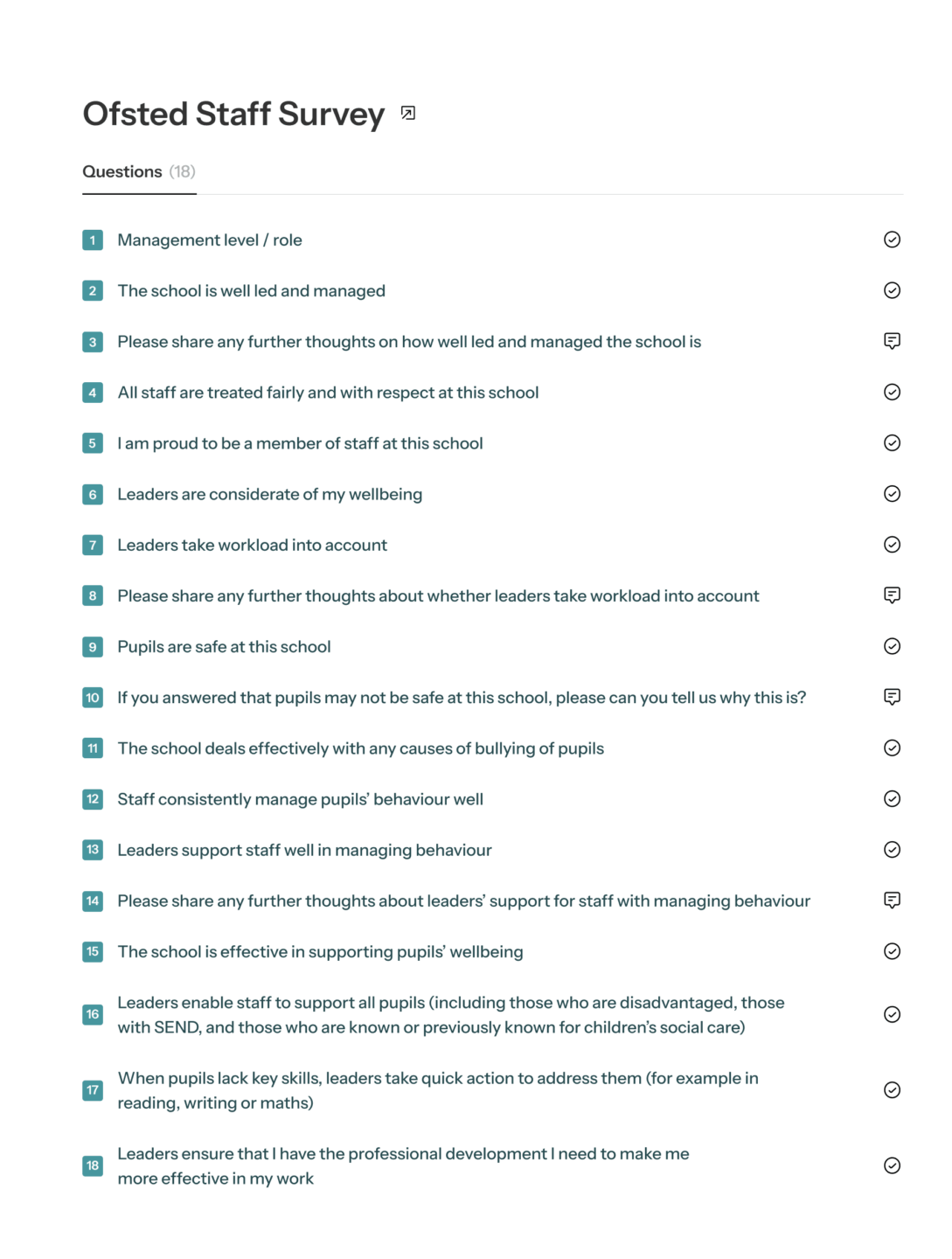
Staff survey data can help leaders understand:
- teachers’ views on the quality and coherence of the curriculum they deliver
- confidence in subject knowledge and pedagogy
- perceptions of consistency in teaching expectations
- views on the quality and impact of professional development
Headline indicators — such as the percentage of staff who feel well supported to deliver the curriculum or who are confident in key aspects of teaching — can be referenced succinctly in the SEF to support leaders’ evaluations.
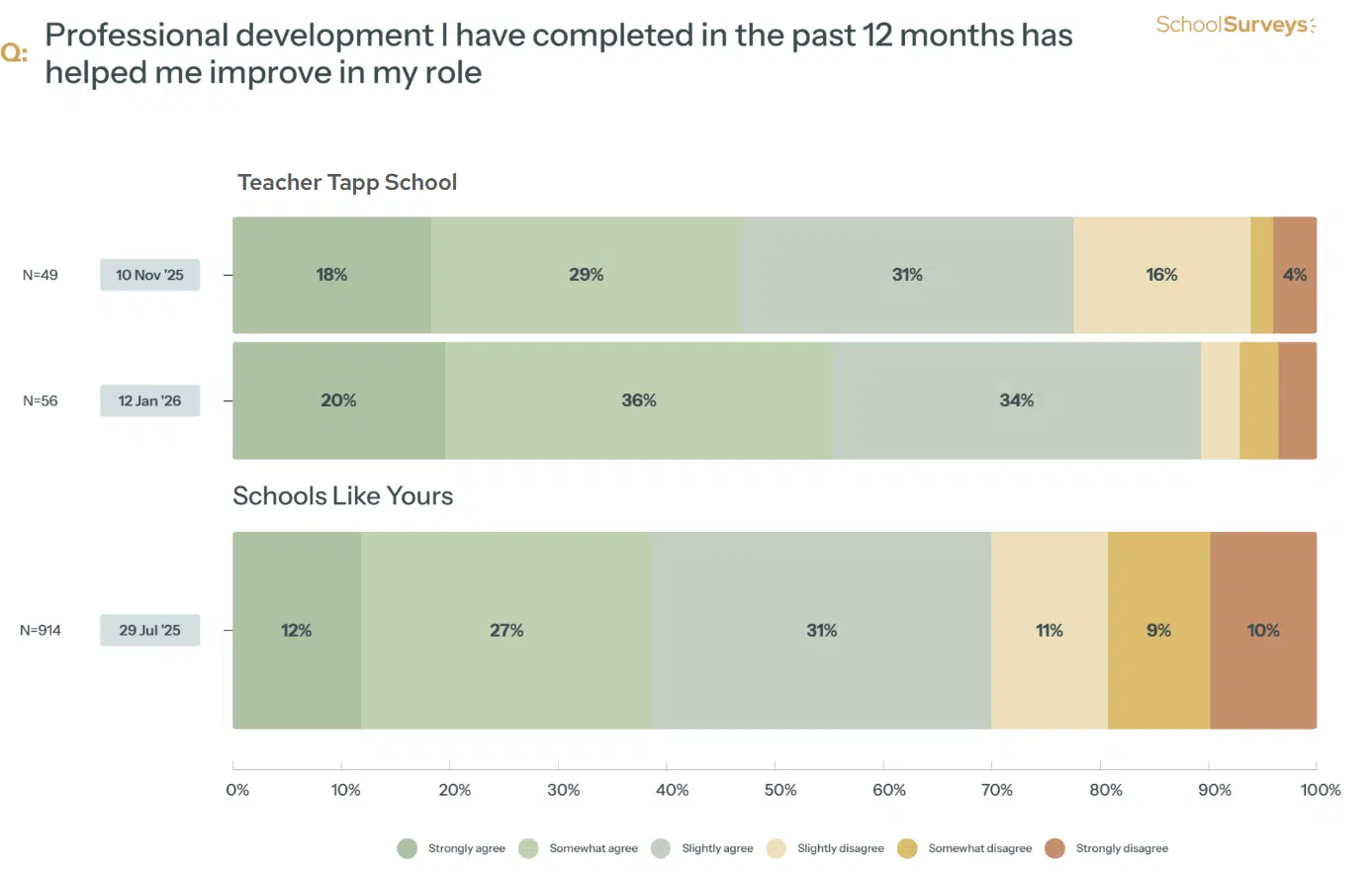
Here is an example (anonymised) that shows how a school has both scored above national benchmarks for ‘schools like them’ and also improved over time:
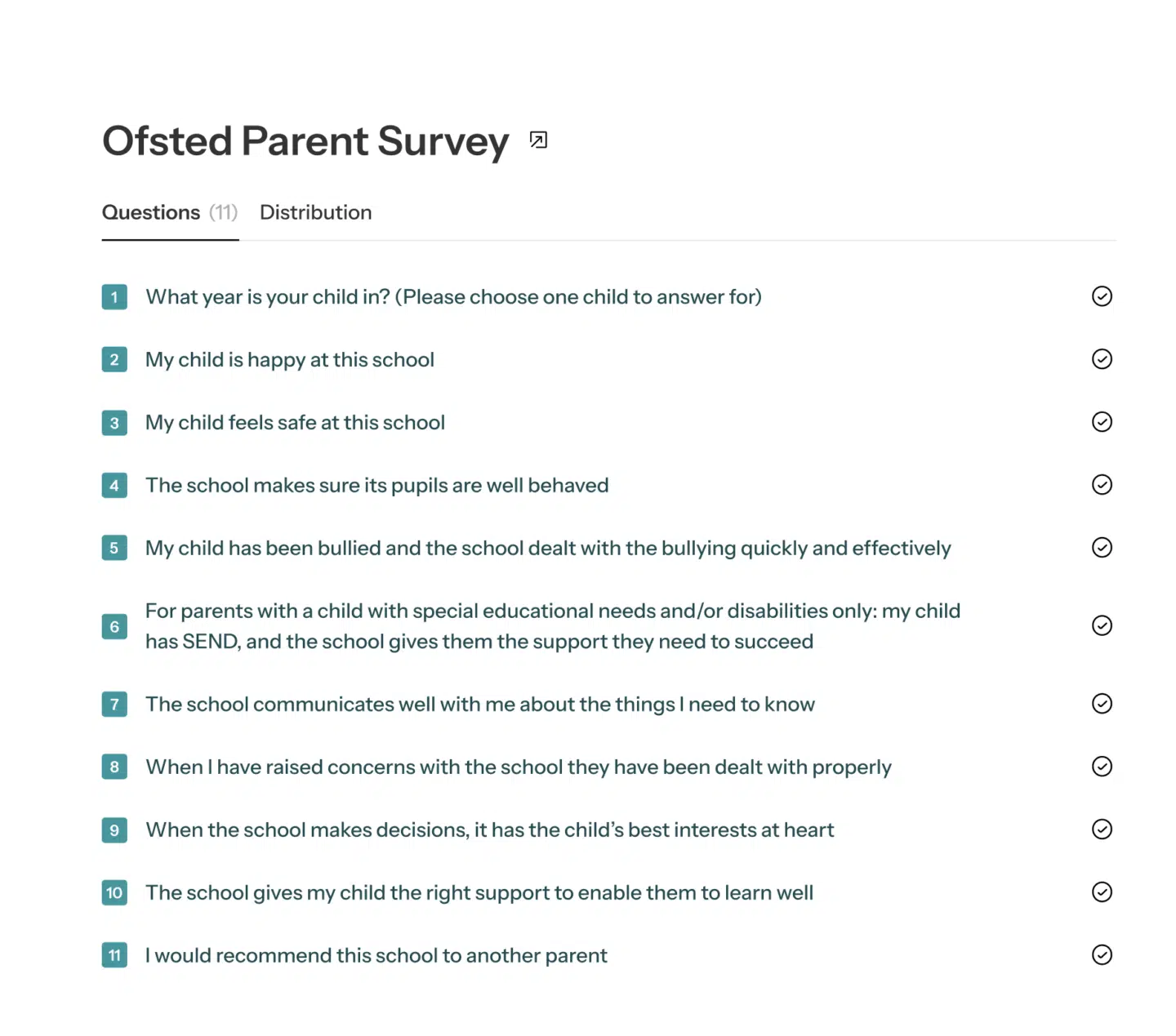
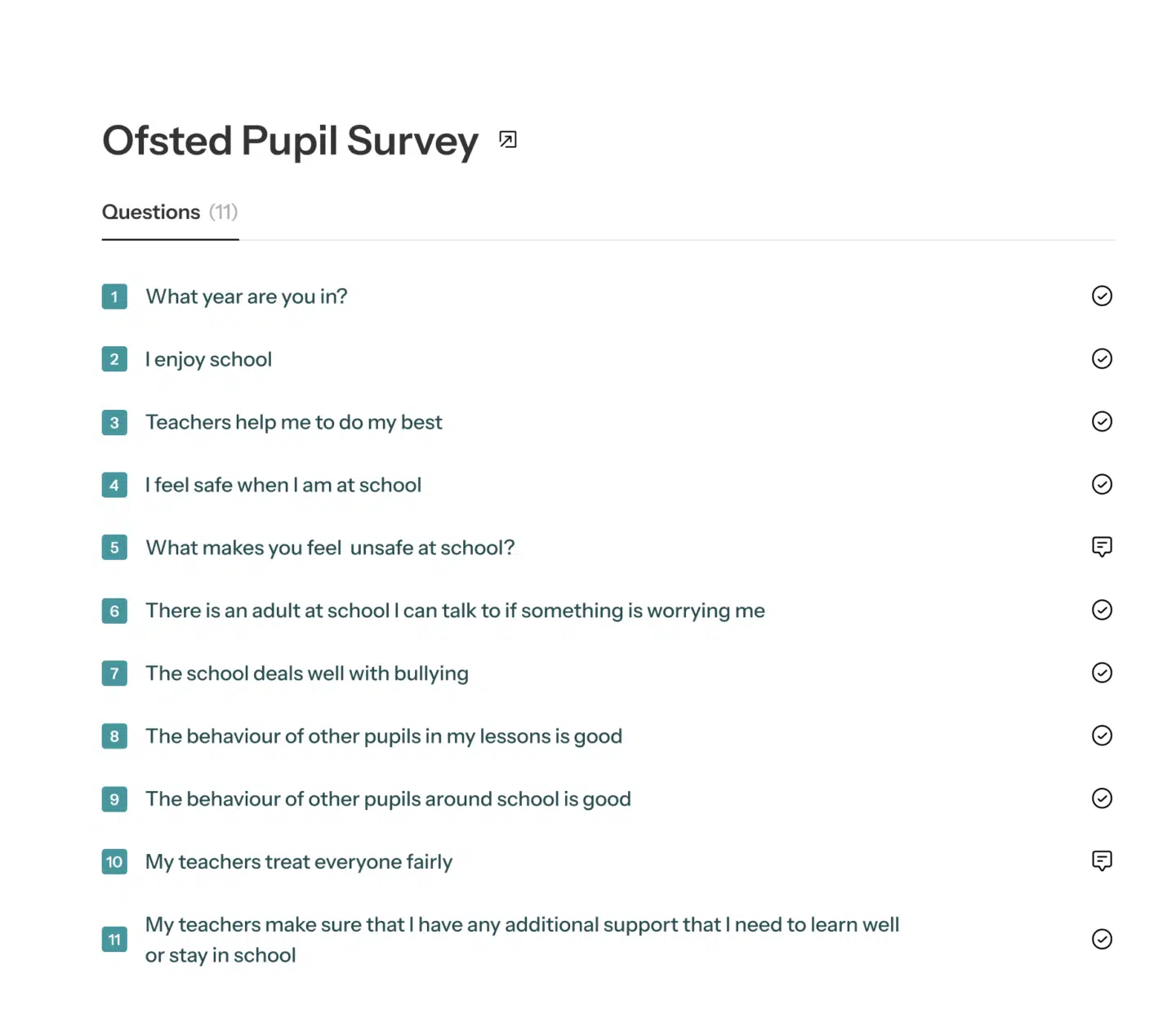
Pupil survey data provides an additional lens. Pupil feedback can offer insight into:
- enjoyment of learning
- understanding of what they are learning and why
- awareness of their own progress
- perceptions of teaching quality and support
Used carefully, pupil survey data can help leaders test whether curriculum intentions translate into positive learning experiences for pupils.
Using survey evidence proportionately in the SEF
As with other areas of self-evaluation, survey data should be used selectively. Leaders do not need to include detailed survey breakdowns in the SEF. Instead, a small number of well-chosen headline findings can help to:
- support claims about curriculum coherence and teaching quality
- demonstrate leaders’ understanding of staff and pupil experience
- show how professional development and curriculum work are informed by feedback
Targeted staff and pupil surveys allow leaders to gather rich insight while keeping SEF references concise and inspection-ready.
Used alongside observation, scrutiny and performance data, survey evidence strengthens the SEF by adding depth and triangulation — helping leaders present an accurate, reflective view of curriculum and teaching that aligns with Ofsted’s expectations.
Further ideas and support
If you are an existing member of School Surveys, remember that you can always email or phone us or book a call if you’d like any help.
If you aren’t yet a member and are interested to find out more, please book a demo here, or get in touch via hello@schoolsurveys.com.