Since we started School Surveys at the request of individual headteachers back in 2022, our platform has come a long way. What started as a powerful tool for those school leaders to track their own staff views and school priorities with Teacher Tapp benchmarks, has now become a fully flexible school and Trust surveying platform.
There are several approaches to surveying across your Trust. We’d like to suggest that you consider joint surveying. Here we set out why joint surveying is so powerful for building healthy improvement cultures in your schools – and how central coordination can make it happen.
If you would like to discuss surveying in your Trust and how we can support you, please book a meeting:
The journey our Trust surveying has been on
Initially, we built a Trust portal that allowed central Trust staff to run their own surveys across their schools. The central team manages the whole process, involving individual schools as much or as little as they wish. This remains very popular. We call this Trust-led surveying, and have several Trusts using this approach very successfully, with great engagement and results.
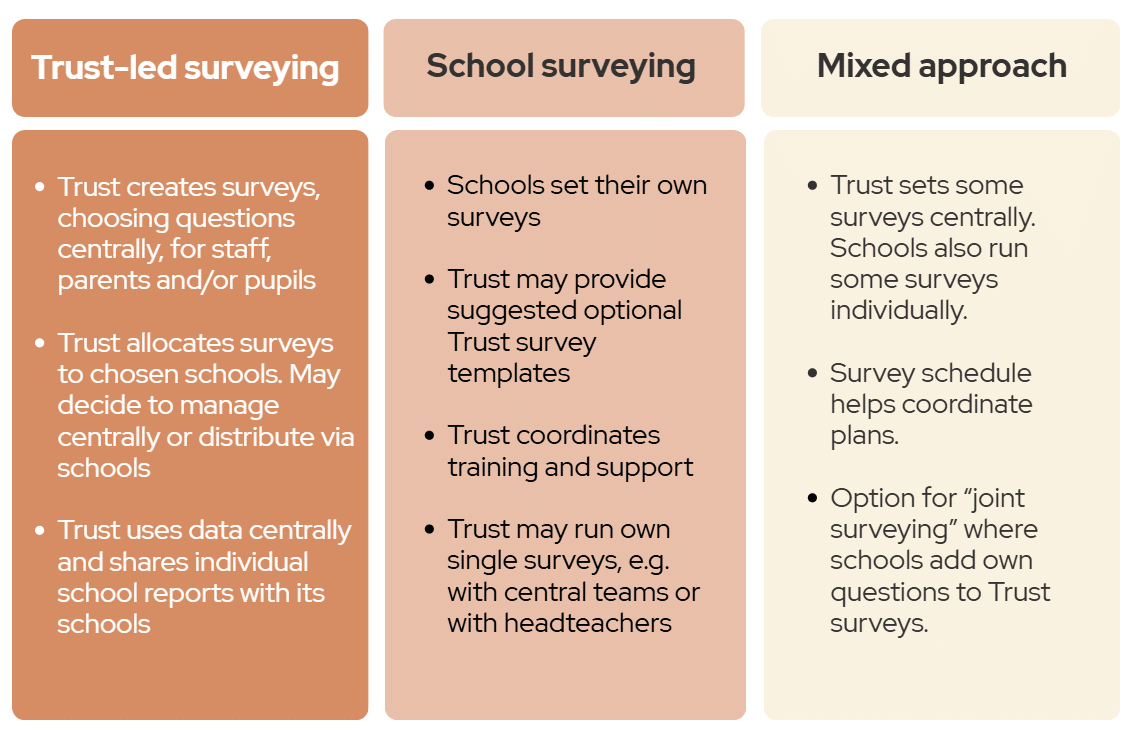
However, we saw this wasn’t working well in all trusts. We noticed the tensions that could sometimes arise between Trust and school priorities, and the frustrations for Trust leaders when responses rates weren’t high enough. We wanted to find another way to make Trust surveying feel closer to the action, and more inline with those first principles of School Surveys – asking questions to shed light on the most important and immediate priorities to drive school improvement, and to build a transparent culture.
Our first efforts to develop a mixed approach back in 2022 led to “Embedded Questions” (Trust questions built into the school’s surveys but not visible to the schools). Then, a year later, we transformed this into Joint Surveying – similar to embedded questions, but with greater transparency and more flexibility.
How joint surveying works
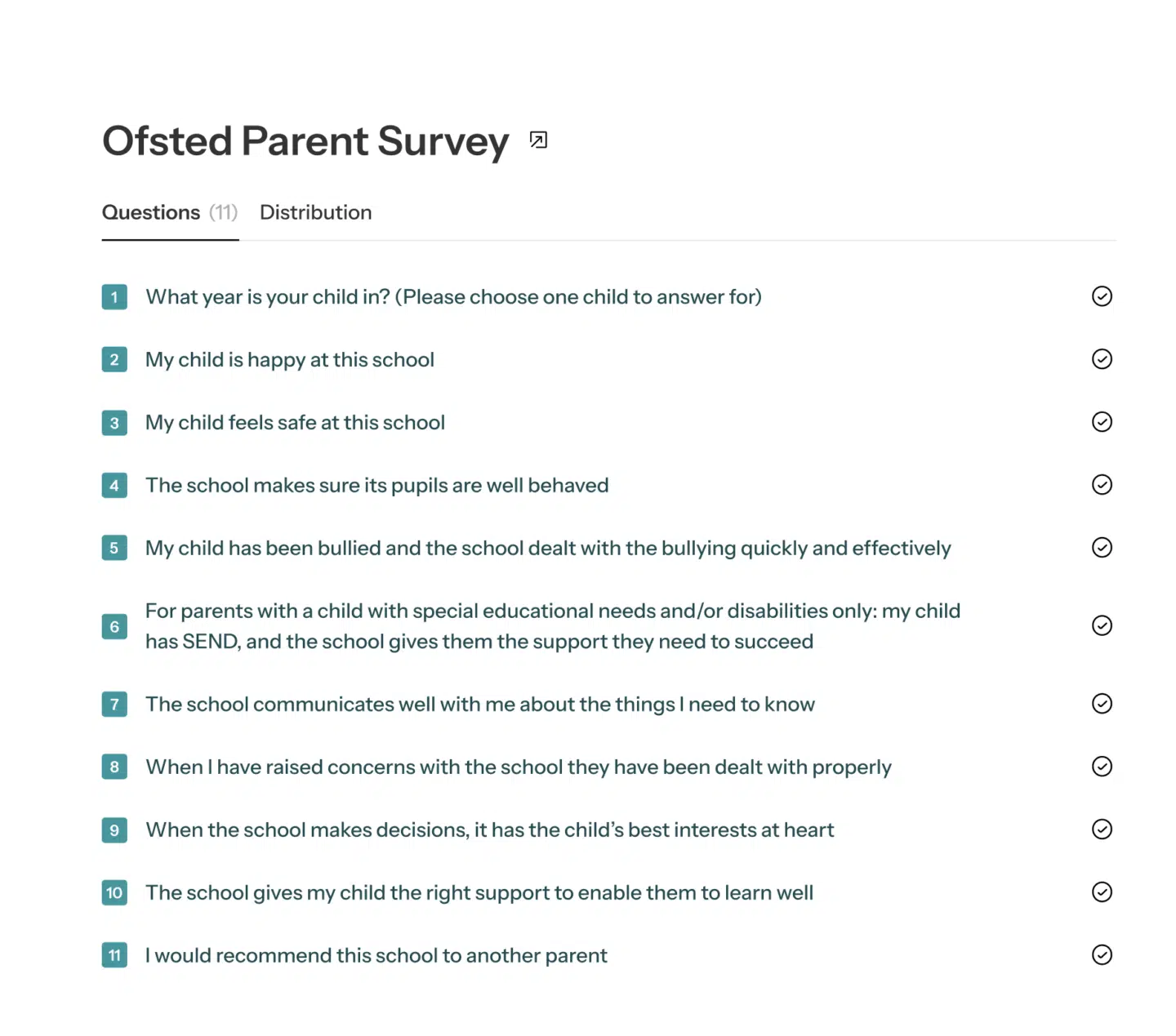
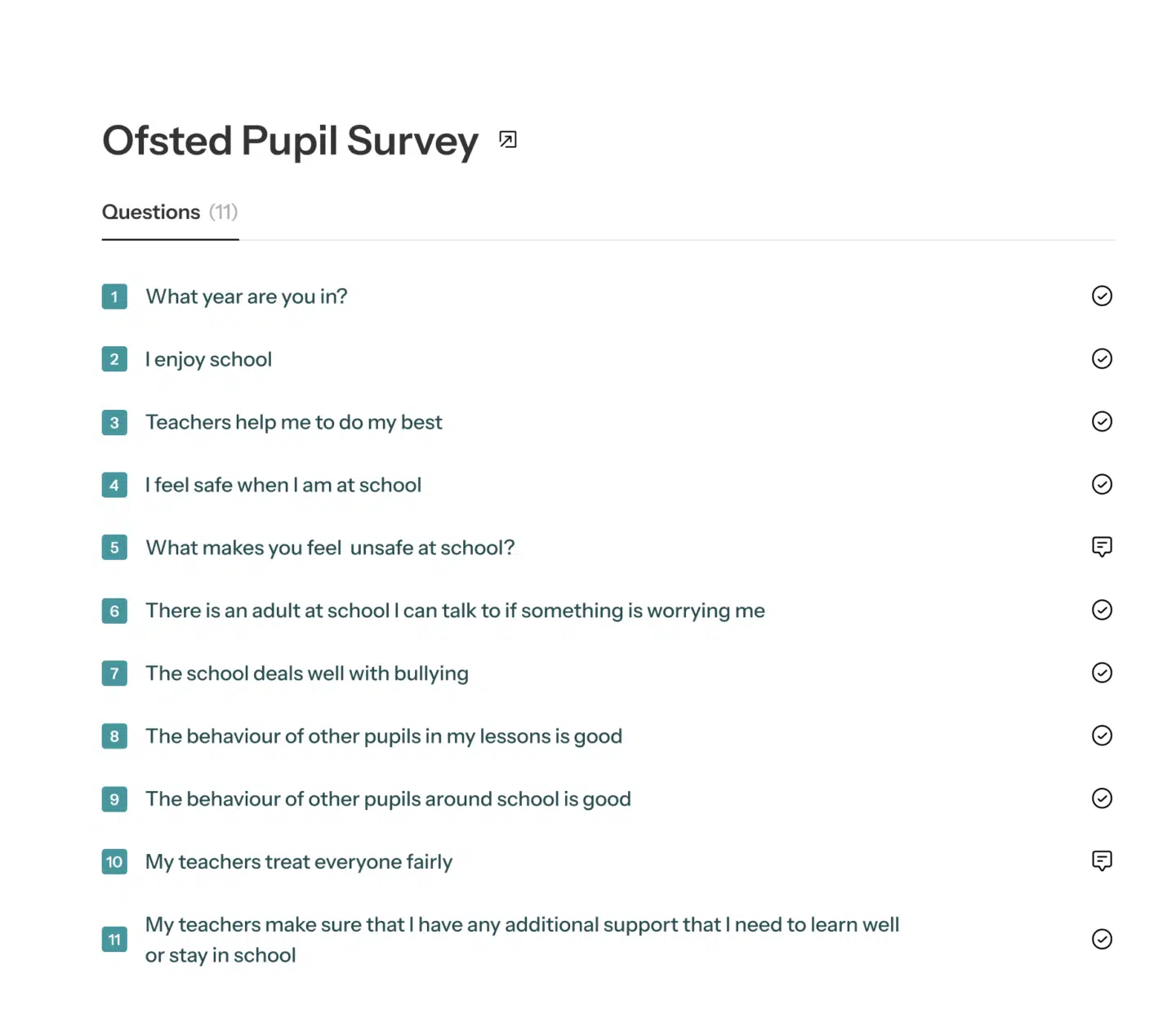
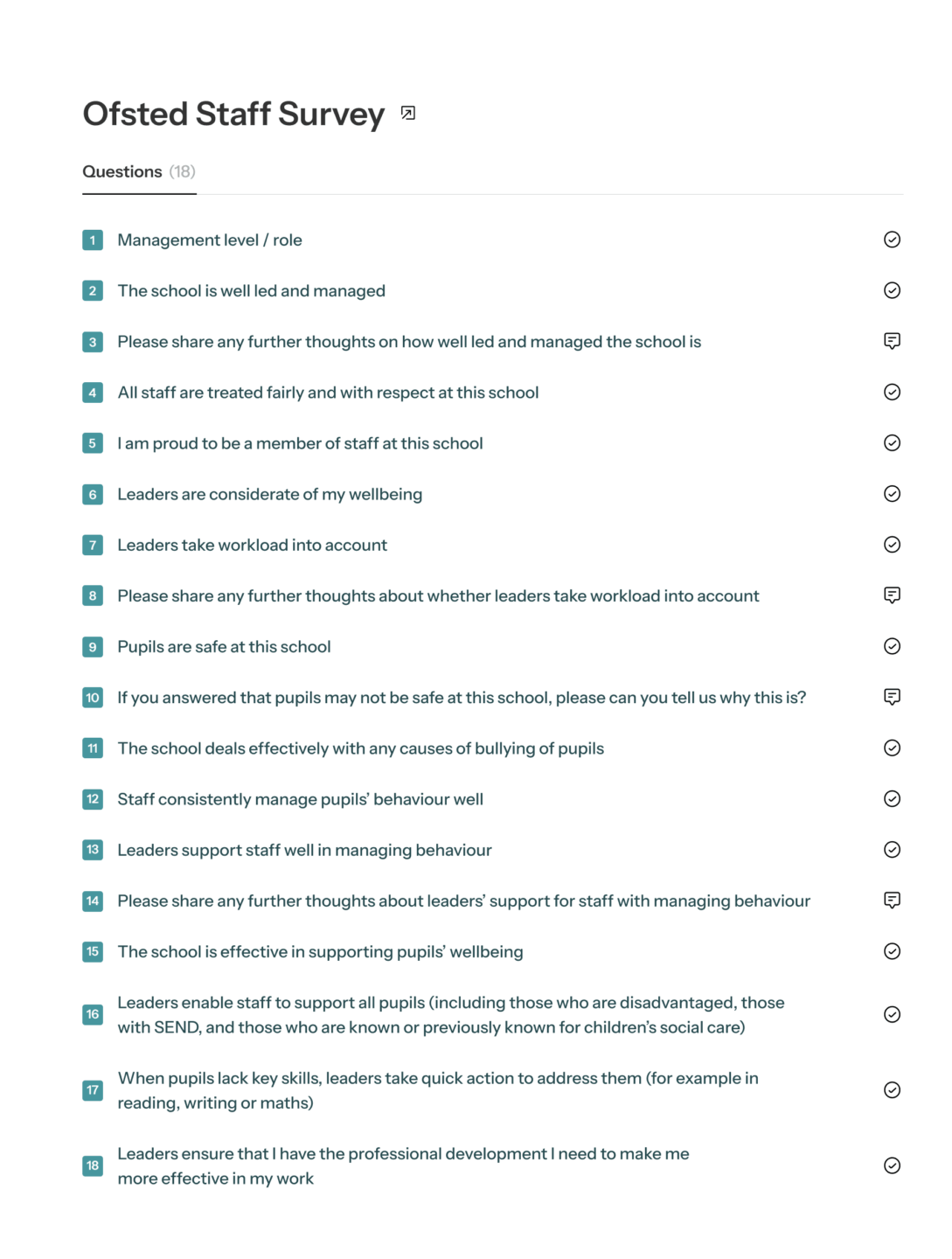
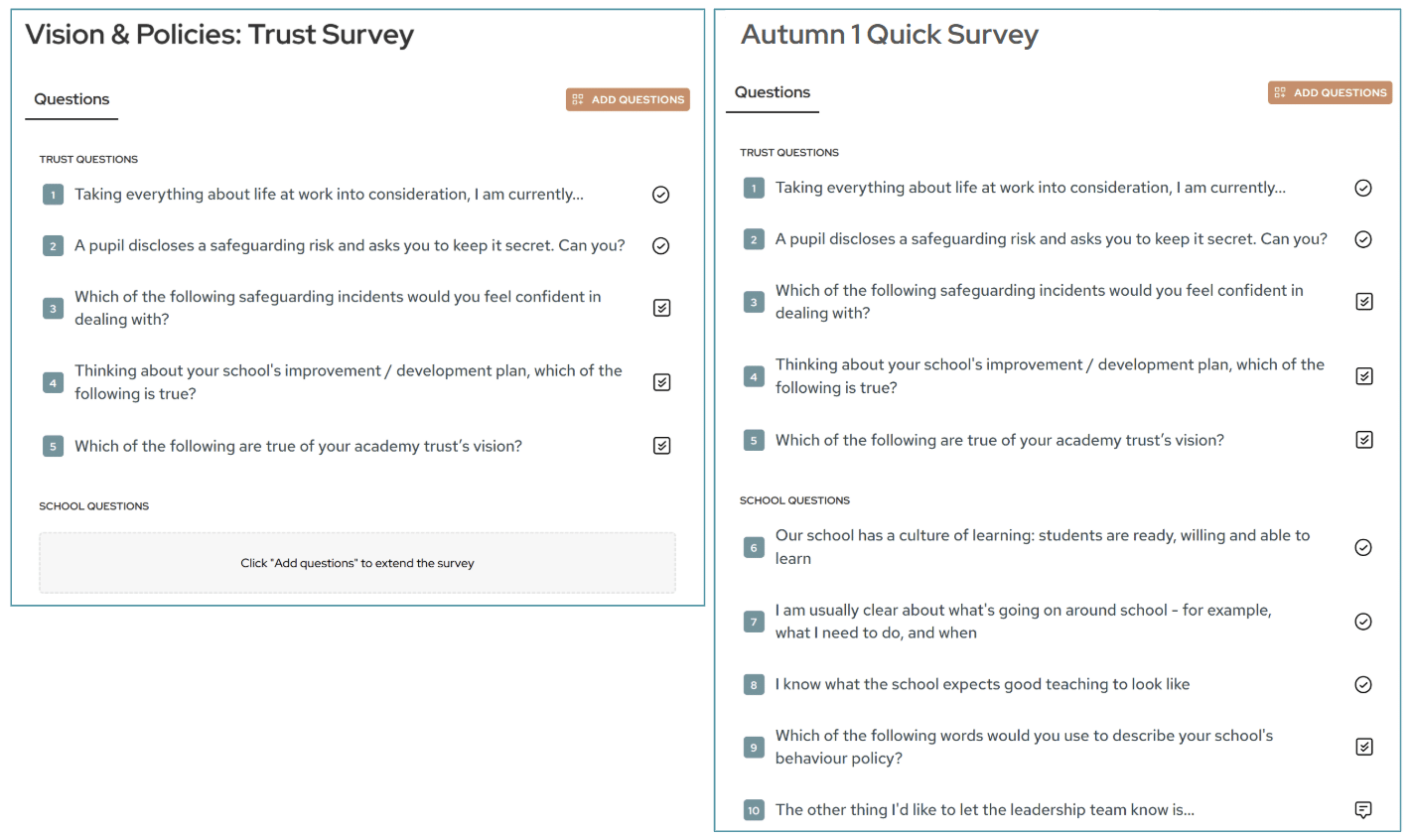
Setting questions and dates: the Trust sets a survey, choosing a template or their own questions, and invites the individual school leaders to preview it and add questions of their own if they wish to. For example, there may be something a school wants to track progress on from last year, or a strand of the SDP that feels particularly important to take views on.
We recommend that the overall survey length remains manageable – much past 10-15 questions and you may have people struggling to get to the end.
Individual school leaders can also adjust the surveying window to suit their school, within parameters set by the Trust. The Trust decides how long that window should be, giving schools options around exactly when to open and close it within that time. Leaders within schools will be most aware of opportunities to time a survey during a staff training session, for example, or to avoid the close date being at the same time as a big assessment data deadline.
Individual school leaders may also choose to re-name the survey; this will appear on their school’s survey report, whilst the overall Trust survey and report will keep its original name.
Here is an example of a start of the year survey set by a Trust (on the left), with the additions and name change an individual school has made (on the right):
Inviting people to respond: as with all Trust-led surveying, Trusts can choose whether to administer centrally, or ask schools to do it. School-specific links, QR codes and posters make this easy to do, and our optional secure emailing system can be used to manage all the notifications automatically if that is preferred (managed centrally, or by individual schools).
For the respondents, the survey runs as one experience, with no need to follow different links or codes.
Reviewing the results: all surveys can be tracked live in the portal, indicated responses and helping leaders know if reminders or survey extensions are required.
Completed survey reports are sent out to leaders as soon as the survey closes:
- School leaders receive their school survey report with its mix of Trust questions and their own. It includes national benchmarks provided by School Surveys – but not results from across the Trust.
- Trust leaders receive their Trust survey report when the overall survey window closes. This report has both national School Surveys benchmarks and comparisons across the Trust’s own schools. It doesn’t include data from all the additional questions their different schools added, but they can view this information via the school reports if they wish to.
The Trust makes surveys run; the schools make them meaningful
An advantage of this approach is that the Trust sets of the overall agenda and parameters to ensure important engagement milestones are met, whilst the school gets the chance to personalise to their situation without needing to manage the overall process. Respondents across the schools get one simple link to follow, allowing them to share their views for the Trust and the school without needing to complete multiple surveys.
There is still the option for separate Trust and/or school surveying as well. It could be that the combined approach is used only for certain times or types – for example, a staff survey across the Trust at the start of the year, or a review of parent experiences of SEND support across the Trust.
Example plans
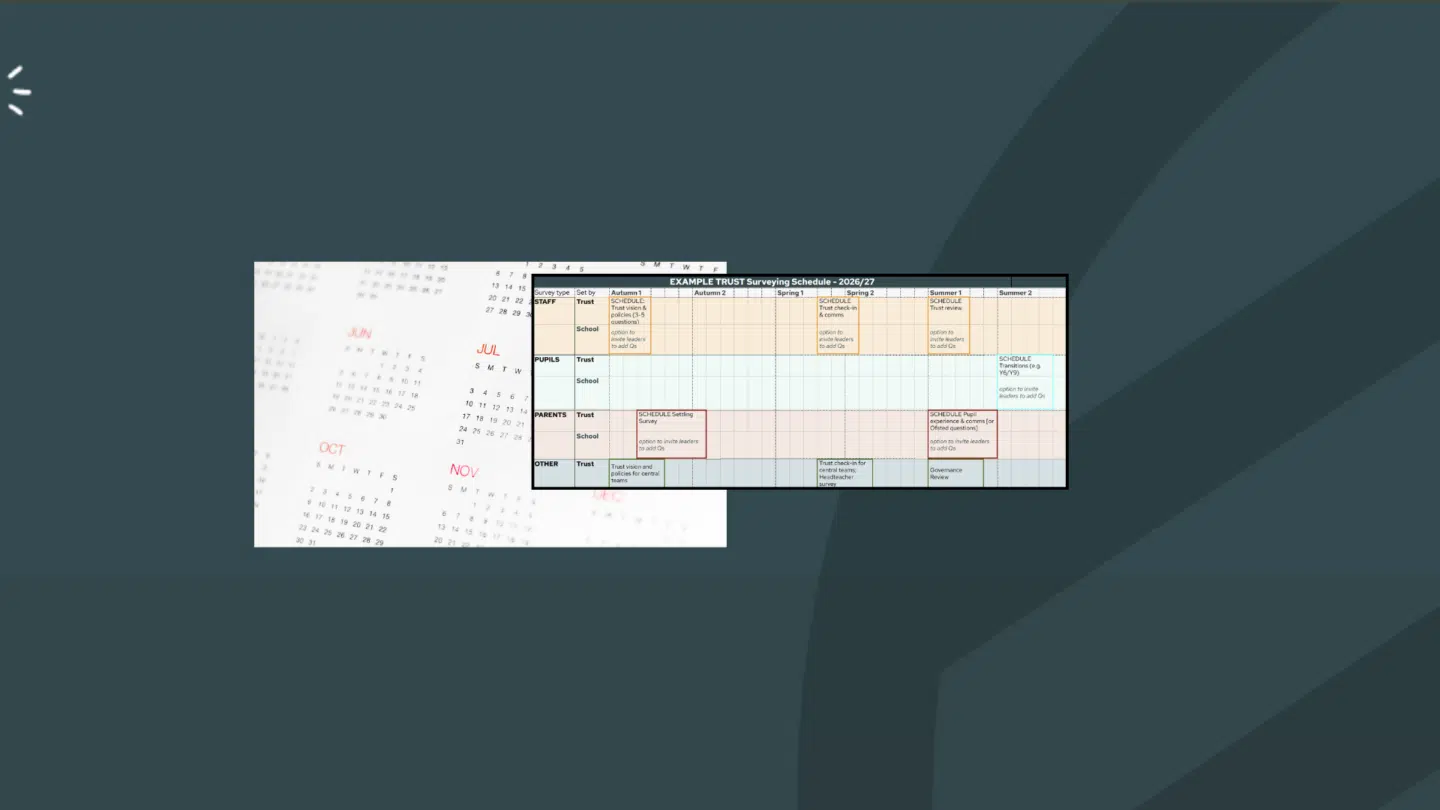
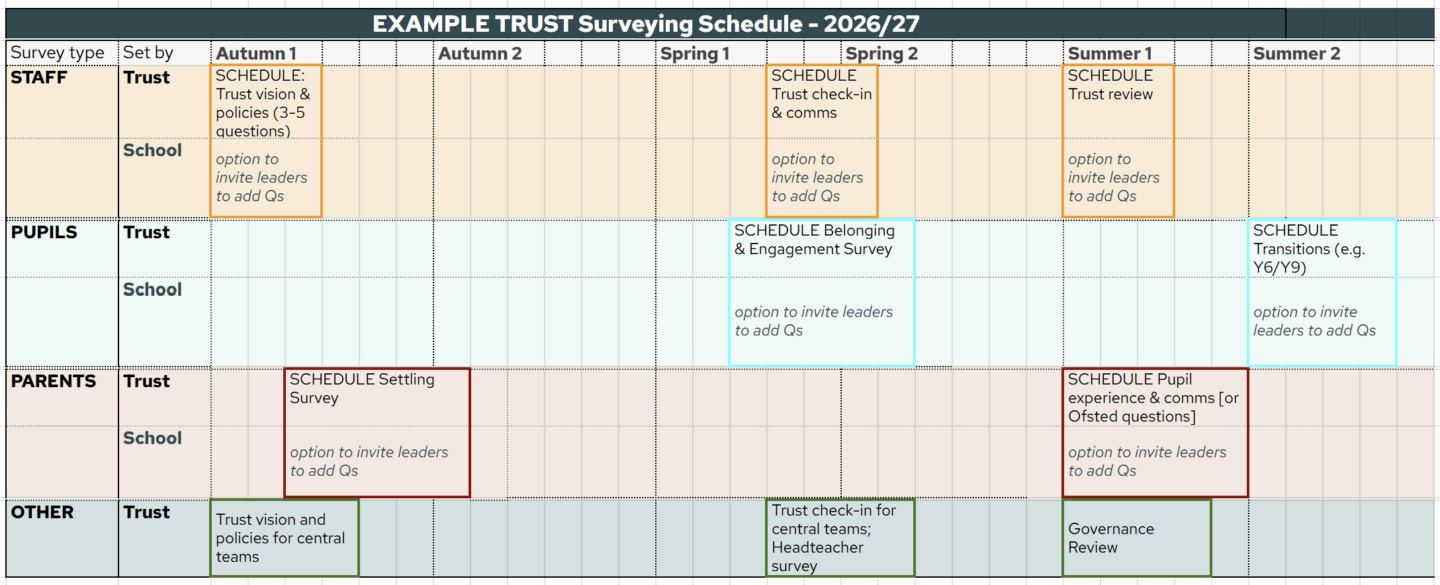
Here’s an example of a Trust plan, before any school-led input:
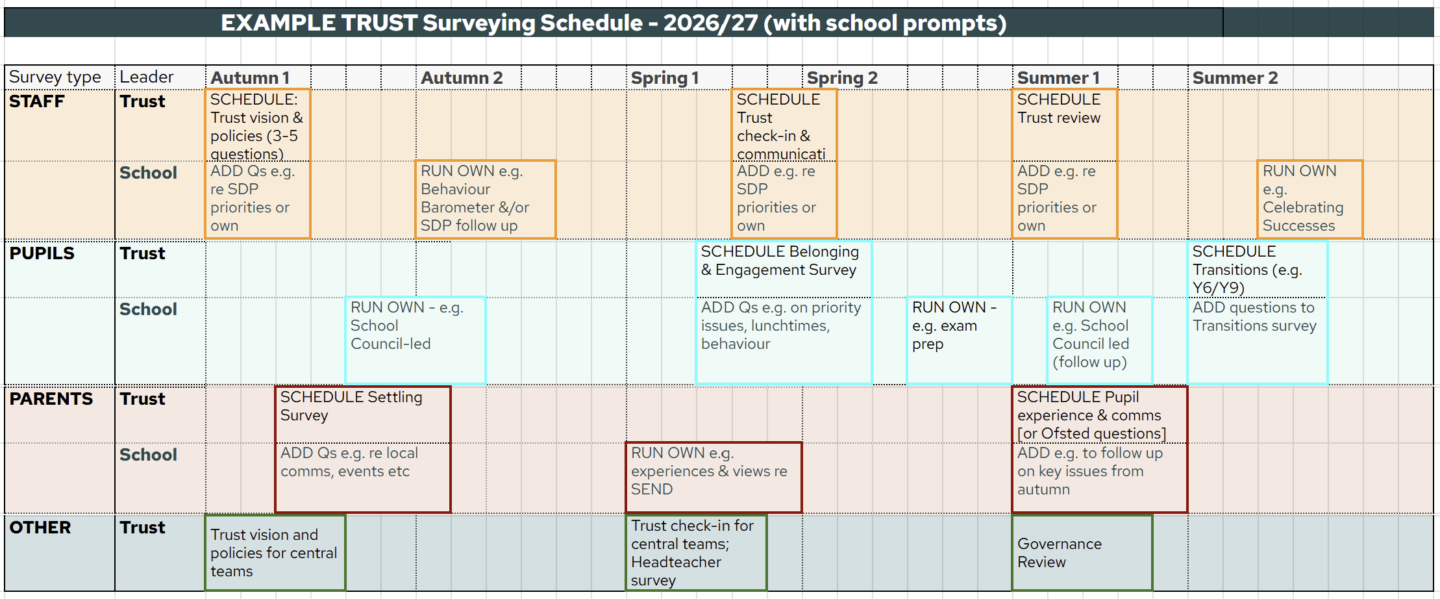
And here’s an example of the same plan, with suggested school-led activity prompts included:
Downloadable templates
Download the template to make your own version. Click here.
Could this work well for you?
We are happy to help you talk through the approach that suits you best for the moment, and discuss moving between approaches. This article on Trust surveying sets out the different approaches for you to compare them.
There is one pricing structure, so it is possible to combine approaches, and/or take different approaches for different types of stakeholders. Our Trust pricing is based on how many schools there are in the Trust, and their sizes: large (secondary / all-through) / medium (most primaries, middles and specials) / small (under 150 pupils). We do not price according to specific numbers of staff or pupils.
Whichever approach is best for your situation, we are confident that School Surveys can help you to gain deeper insights, inform strategic decisions, and ultimately enhance the educational experience and outcomes across your schools. We would love to partner with you and would be delighted to answer any further questions you may have.
Please get in touch and book a short online meeting with us at a time that suits you by clicking here
You are also welcome to:
- Visit the blog to find guides, advice and case studies on all aspects of surveying
- Call on 0330 043 4469 from 8am to 6pm during the working week
- Email us via hello@schoolsurveys.com