
The new Schools White Paper sets an expectation that by 2029, every school should “monitor pupils’ sense of belonging and engagement”. So, what is belonging and how does one measure it?
Ofsted recently updated its own pupil survey. The slimmed down version has dropped questions about extra-curricular activities, independence and health, but it’s clear that they still want leaders to take account of pupils’ views on inclusion across all aspects of school life.
How not to measure belonging
Belonging is a complex construct for adults to define, let alone for students to identify, so be wary of relying too much on simple generic statements such as:
“I feel part of my school”
“I feel a sense of belonging at school”
These can tell you something — but they are often too vague to drive practical action.
Also, be cautious about questions that stray into general wellbeing territory — for example, asking pupils about their anxiety, physical health, or after-school hobbies. Of course, these areas matter and may be useful to know about, but:
- Are they central to the school’s core purpose?
- Are they within leaders’ capacity to influence in meaningful ways?
If the survey tells you that pupils spend too much time on phones or have poor diets, what next steps can the school take?
Measure what matters
Instead, consider focusing on “mattering” — the idea that pupils need to feel noticed, valued, and significant within the school context — especially in relation to their learning and relationships with adults and peers. Research suggests that mattering is closely linked with belonging and with positive engagement in school. (For a thoughtful discussion of belonging vs mattering, see this overview by the Open University.)
Focus on classroom experience & learning relationships
For a tangible take on belonging, focus on what happens in classrooms and in the core relationships that define daily school life; how students connect with their teachers and learning. Research on student engagement and school climate highlights how teacher–student relationships are among the strongest predictors of school belonging and academic engagement. (For example, see this research summary from UCL’s Institute of Education on belonging and pupil outcomes.)
For example:
- Last time you missed a lesson, did your teacher ensure you caught up?
- When you last got stuck with some homework, who did you get help from?
- Do you know what you need to do next to improve in _______?
- Think of your most recent lesson. Can you describe what you are learning this term?
- Teachers listen to what I have to say in lessons
- Is there an adult in school you can talk to if something worries you?
Questions like these get closer to mattering in context — not just “feeling included,” but feeling that adults and peers care about you as a learner and as a person.
Other important areas — but only where action is possible
Other factors matter too — such as whether pupils feel physically safe, if they have time to eat at lunch, or if they can access pastoral support. But these questions are most useful when they tie directly into school improvement planning and when the school has the ability to act on the findings.
Examples could include:
- Do you feel safe during breaks and lunchtime?
- Were you able to eat enough at your last lunchtime?
Measuring pupil belonging is not just about collecting data, it’s about asking the right questions to drive better relationships, clearer teaching, and stronger learning outcomes. By focusing on mattering within the school context and prioritising questions that you can act on, surveys can become catalysts for meaningful change.
Turning insight into action with School Surveys
In the pupil area of the School Surveys portal you can find the Learning Engagement Survey template with questions to ask your pupils:
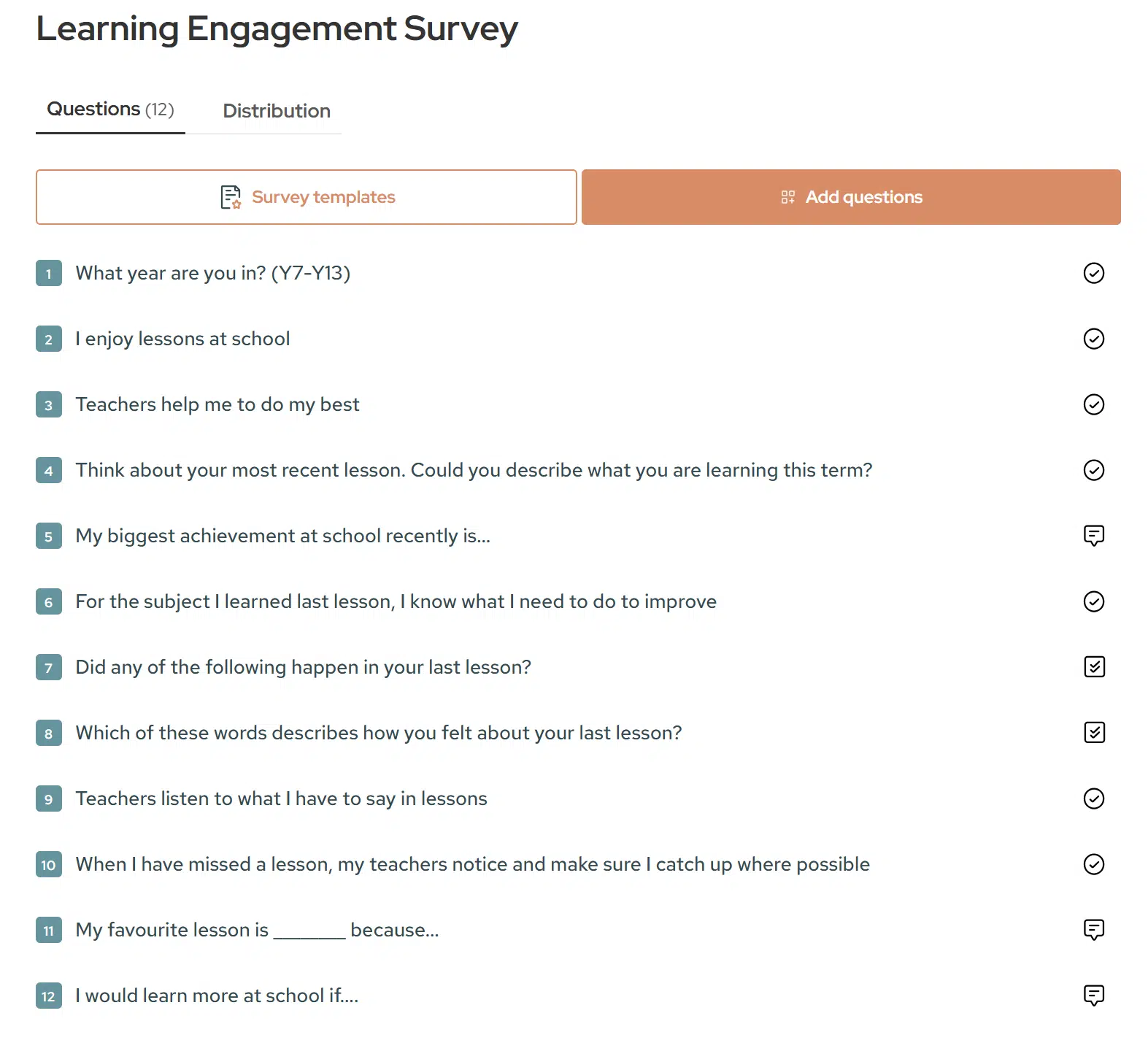
As well as editing the template for your situation, it is also possible to:
- Write your own questions – add as many of your own questions as you wish.
- Make comparisons over time — as questions are used by multiple schools and trusts, we provide benchmarks for you to make meaningful comparisons across the sector. You can also track the same questions over time to see progress within your own setting.
- Suggest questions for us to develop
What else can we find out? Staff and parent perspectives
Belonging isn’t only a pupil experience — strategy should be informed by the views and beliefs of staff and parents too.
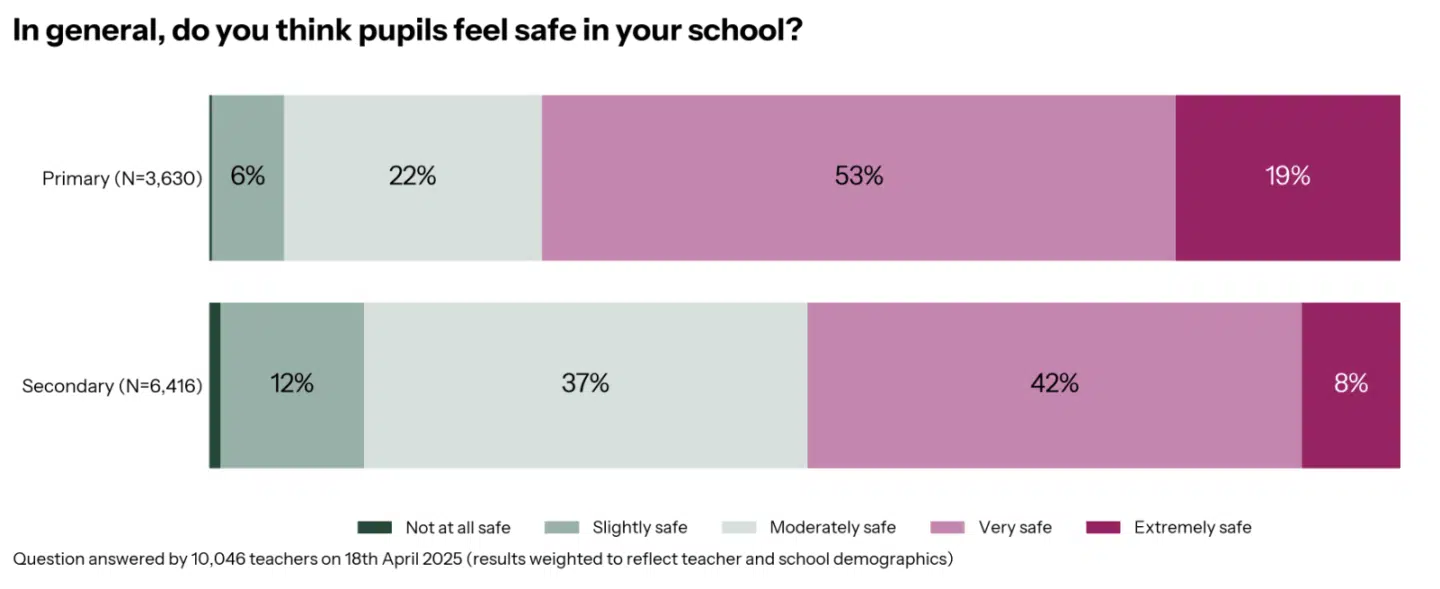
Staff and parent perspectives often help triangulate pupil survey findings and give richer context for improvement planning.
Further ideas and support
If you are an existing member of School Surveys, remember that you can always email us or book a call if you’d like any help. If you aren’t yet a member and are interested to find out more, please get in touch via hello@schoolsurveys.com.


