
Inclusion sits at the heart of Ofsted’s expectations for schools. Inspectors are clear that inclusion is not a standalone policy or provision, but something that should be woven through leadership, culture, safeguarding, SEND support, behaviour and personal development. When writing your Self Evaluation Form (SEF), leaders are expected to show not just what they do to promote inclusion, but how effectively it is experienced by pupils, staff and parents.
Survey data can play a powerful role in evidencing this.
What Ofsted looks for around inclusion
Within the Education Inspection Framework, Ofsted considers inclusion across several judgement areas. Inspectors want to see that:
- All pupils, including those with SEND or from vulnerable groups, are supported to access learning and wider school life
- Pupils feel safe, valued and able to be themselves
- Bullying and discrimination are dealt with effectively
- Staff understand their role in supporting diverse needs
- Leaders have an accurate view of how inclusive the school community really is
Crucially, Ofsted is interested in whether leaders know how inclusive their school is — and how they use evidence to inform improvement.
Using staff survey data to evidence inclusive leadership
Staff perspectives are particularly valuable when evidencing inclusive practice in the SEF. Survey data can help leaders demonstrate how effectively expectations around inclusion are embedded and supported.
For example, headline metrics such as:
- the percentage of staff who agree that leaders enable them to support all pupils effectively
- the proportion who believe pupils are safe in school
- the percentage who agree that the school deals effectively with bullying
can provide concise, credible evidence that inclusive values are understood and enacted in day-to-day practice. Where results are strong, they validate leadership impact. Where they are weaker, they offer a clear starting point for targeted improvement – something inspectors actively welcome.
Capturing pupil voice on belonging and community
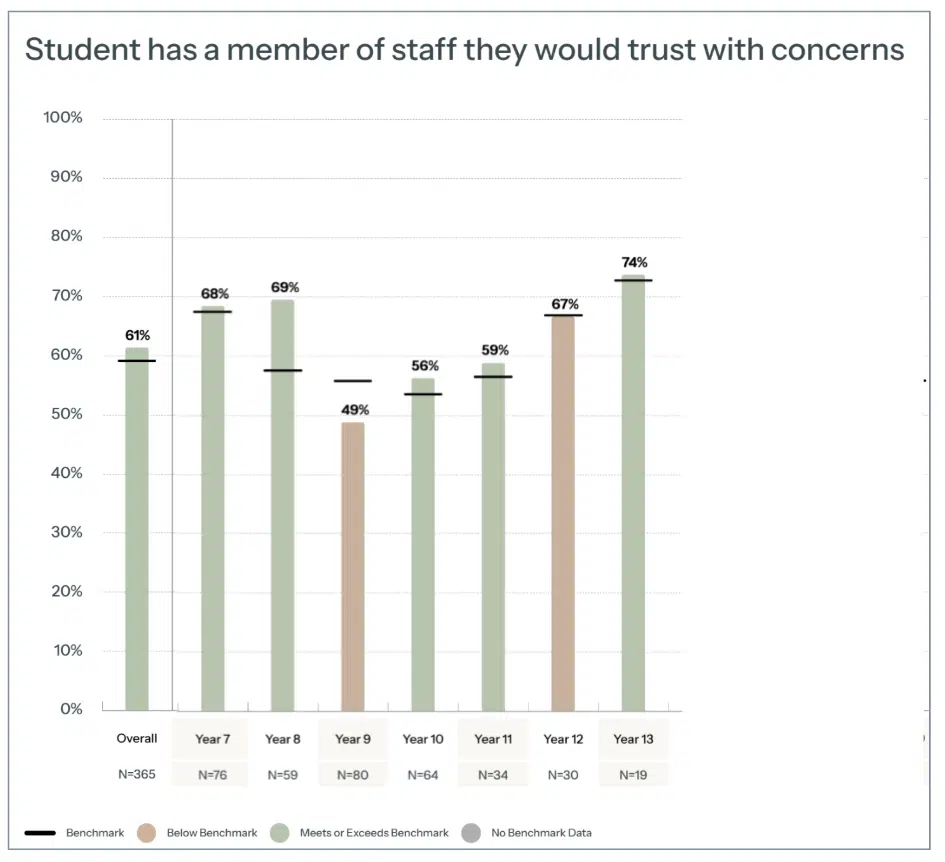
Ofsted places significant weight on pupils’ lived experience. Surveying pupils about inclusion-related themes such as belonging, relationships, safety and participation allows leaders to evidence how inclusive the school feels from a pupil perspective.
Rather than relying on anecdotal feedback, structured survey data enables leaders to:
- identify patterns across year groups or pupil cohorts
- demonstrate how inclusive culture is monitored over time
- triangulate pupil views with staff and parent feedback
This is particularly useful when writing the SEF narrative around other areas too, such as personal development, behaviour and safeguarding.
Engaging parents, including those of pupils with SEND
Inspectors are increasingly attentive to parental confidence in a school’s inclusive provision, especially around SEND. Parent survey data can help schools evidence:
- how well families feel supported
- how effectively the school communicates around additional needs
- whether parents believe their child belongs and is thriving
Short and user-friendly parent surveys allow leaders to gather meaningful insight without overloading families, and to demonstrate that parent voice actively informs strategic decisions.
Turning survey insight into SEF evidence
The strongest SEFs don’t just quote data — they explain how leaders use it. Survey results can be referenced to:
- justify priorities in the school improvement plan
- show how leaders evaluate the impact of inclusion strategies
- evidence reflective, responsive leadership
By using survey data thoughtfully, leaders can demonstrate a deep, honest understanding of inclusion in their school — exactly what Ofsted is looking for.
Further ideas and support
There are lots of other posts that you may find useful here in the School Surveys blog, including boosting parent responses, support with survey planning and our summary of surveying and the new Ofsted framework.
If you are an existing member of School Surveys, remember that you can always email or phone us or book a call if you’d like any help.
If you aren’t yet a member and are interested to find out more, please book a demo here, or get in touch via hello@schoolsurveys.com.


